Maritime Power-to-X (NI/GB Green Shipping Corridor)
Feasibility study and pre-deployment trials completed, 2024–25
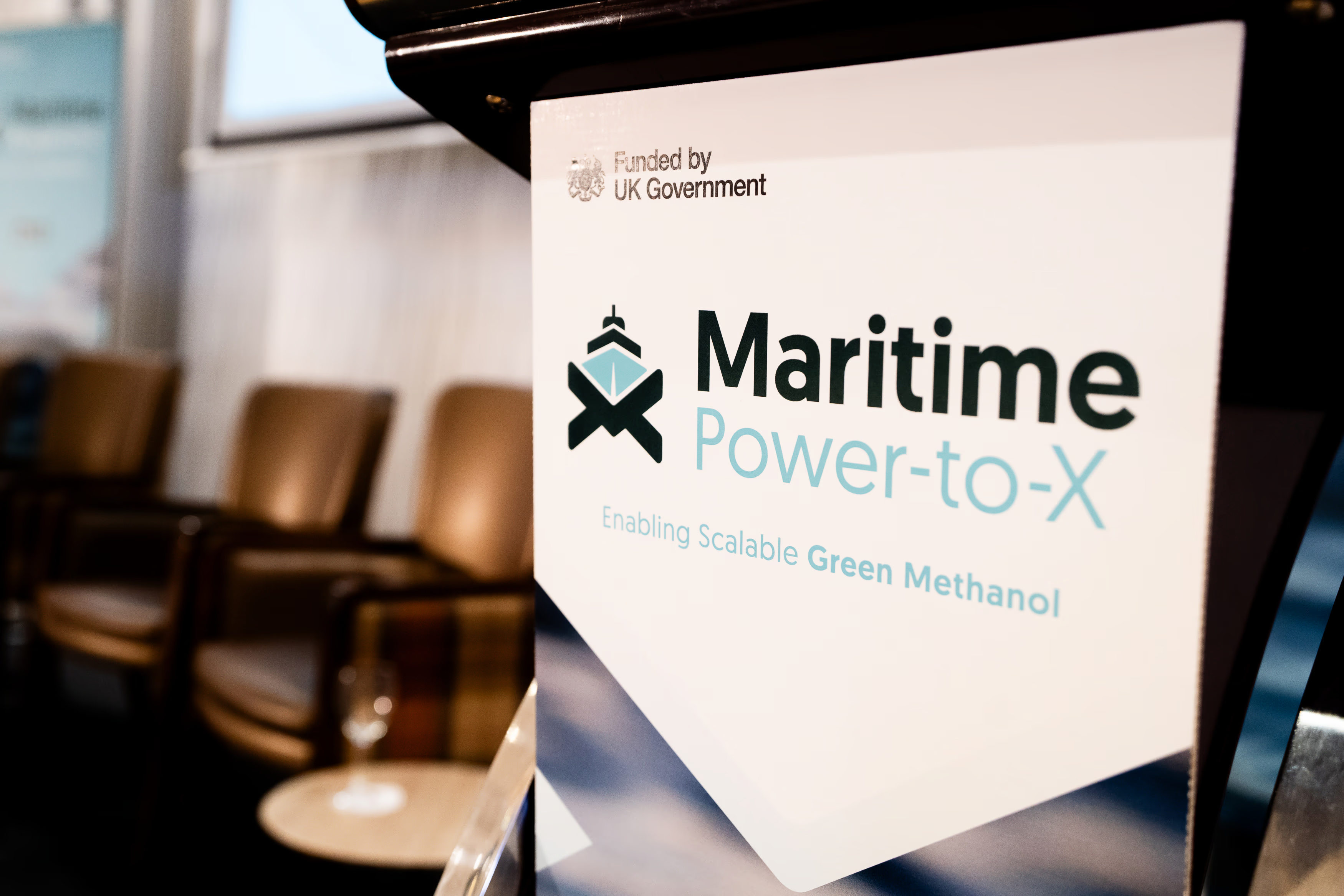
The Maritime Power-to-X project studied a true-zero emission shipping route between Northern Ireland and Great Britain: the NI/GB Green Shipping Corridor. Funded through the Clean Maritime Demonstration Competition Round 4 (CMDC4), the project uses B9's patent-pending carbon loop technology to enable scalable green methanol production by creating a circular CO₂ economy.
Project overview
B9 Energy Storage has developed a patent-pending technology to unlock green methanol as a scalable zero-emission fuel for shipping. The project consortium, including DFDS Seaways, DFDS Logistics, JG Maritime Solutions, Larne Harbour, Mutual Energy, and Teesside University Net Zero Industry Innovation Centre, secured funding through the Clean Maritime Demonstration Competition Round 4 (CMDC4), funded by the UK Department for Transport and delivered by Innovate UK.
Technology and approach
The project investigated the feasibility of an NI/GB Green Shipping Corridor between Northern Ireland and north-west England, using a freight ferry design powered by hydrogen reformed onboard from green methanol. The feasibility study explored synthesising green methanol in the Port of Larne from green hydrogen and CO₂, using a large-scale electrolyser powered by curtailed wind energy.
The system creates a circular CO₂ economy by capturing CO₂ from onboard reformers and returning it to the methanol synthesis plant in the same ISO tank containers used for methanol delivery. This removes the need for external CO₂ sources and gives true-zero emissions without relying on bio-derived or direct air captured CO₂, or carbon offsetting.
How it meets the definition
The UK Department for Transport definition of a green shipping corridor requires a zero-emission vessel, carbon-neutral ports and carbon-neutral logistics operating from those ports. The project addresses this through:
- Green methanol production: synthesised from green hydrogen and CO₂ using curtailed wind power
- Circular CO₂ economy: CO₂ captured from onboard reformers is returned to the synthesis plant, so no external CO₂ source is needed
- Onboard hydrogen reforming: green methanol is reformed back into hydrogen to feed a fuel cell, which generates the zero-emission electricity for the vessel's propulsion
- Flexible infrastructure: ISO tank containers allow bunkering without additional port infrastructure
Project partners
B9 Energy Storage is the technology developer, with DFDS Seaways, DFDS Logistics, JG Maritime Solutions, Larne Harbour, Mutual Energy, and Teesside University Net Zero Industry Innovation Centre.
Project status
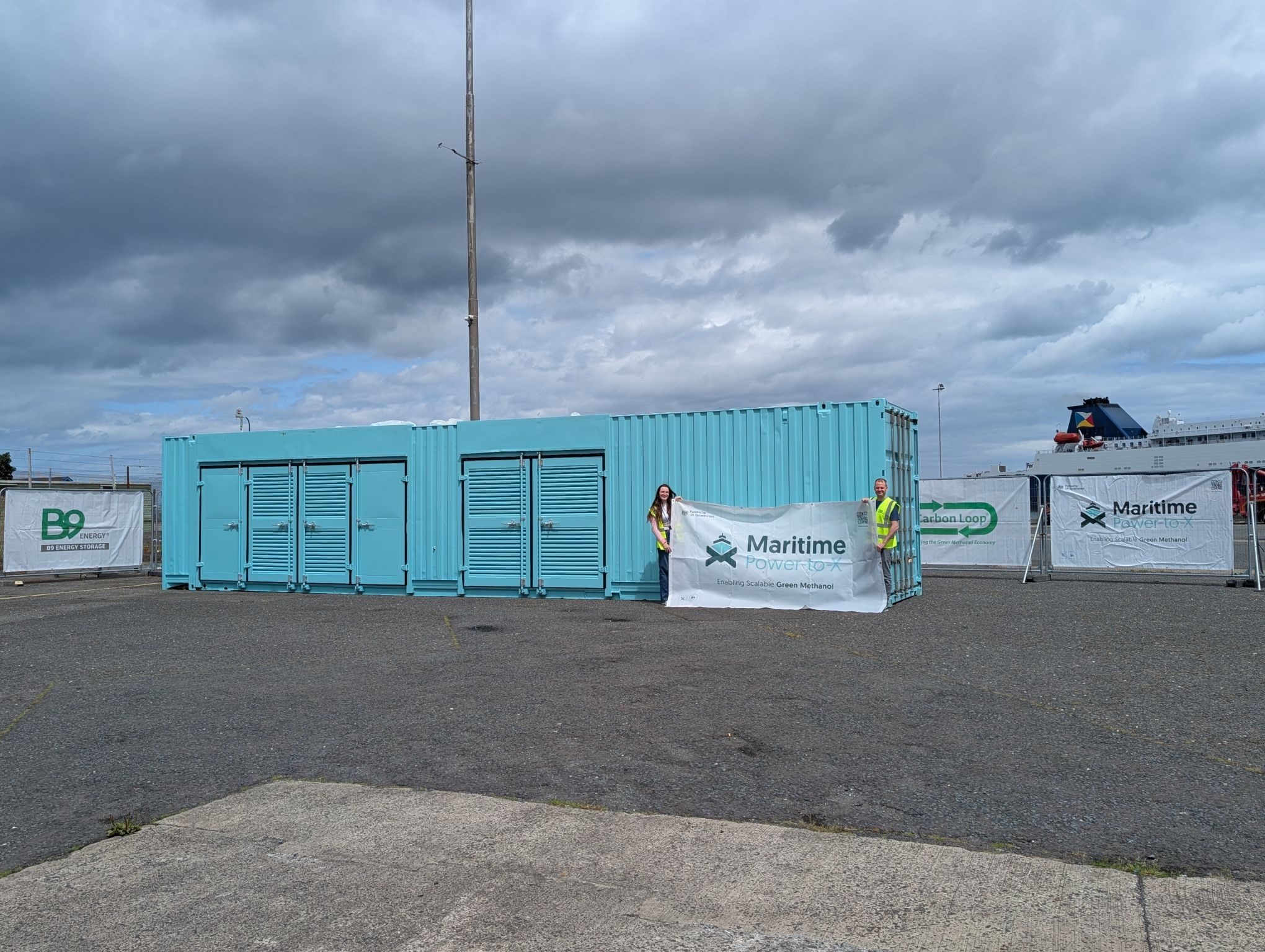
The performance of the new technology was evaluated using techno-economic modelling of the Green Shipping Corridor, which included details of the latest freight ferry design from partner DFDS Seaways. This was followed by pre-deployment trials at the Port of Larne, also a project partner. The feasibility study and pre-deployment trials were completed in 2024–25.
Project details
- Route
- Northern Ireland to north-west England
- Technology
- Green methanol, Power-to-X, hydrogen fuel cells, CO₂ capture
- Funding
- Department for Transport, through CMDC4, delivered by Innovate UK
- Partners
- DFDS Seaways, DFDS Logistics, JG Maritime Solutions, Larne Harbour, Mutual Energy, Teesside University Net Zero Industry Innovation Centre
- Dates
- March 2024 to March 2025
Working on something similar?
Tell us about your site and what you want to achieve, and we'll come back to you.